The Coat That Smelled of River Water
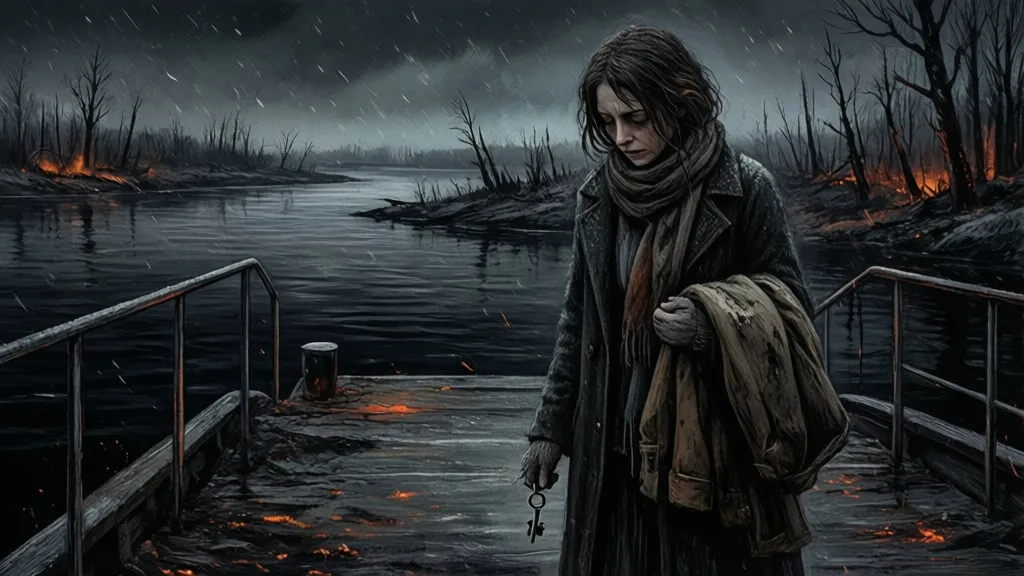
The ash came down like snow that refused to settle, and the river ran black beneath it, which meant something upstream had burned completely. Margot stood at the ferry landing with her brother's coat folded under one arm, the wool still holding the shape of his shoulders, and in her other palm the key sat warm as if it had been held against skin all morning.
She had found both in the boat when she pulled it ashore—the coat bundled in the stern, the key tied with waxed thread to the oarlock. Her brother had been dead for three months. The coat smelled of river water and something older, like stones that had been underwater long enough to forget the sun.
The chapel stood behind her, small and whitewashed, its bell rope swinging in the wind. It moved like something bruised, like a tendon that had been overextended and now hung loose in its housing. No one had rung the bell since the funeral, which was also the last time anyone had opened the sacristy, which was where the key wanted to go.
Margot knew this the way she knew when storms were coming—not through weather but through the particular quality of silence that preceded them. The key had been warming in her hand for twenty minutes now, and if she did not move soon it would begin to burn.
Behind her, across the black water, the first lanterns were moving on the far shore. The ferries would come with morning, which was perhaps an hour away, perhaps two. The ash made it difficult to judge. Everything looked like twilight, which was the hour when bargains were traditionally struck, and Margot had the uneasy sense that she was standing in the margin of someone else's negotiation.
She walked up the path.
The chapel door was unlocked, which it always was, which was the kind of thing people said with pride until something went missing and then they said it with resignation. Inside, the air smelled of beeswax and damp hymnals. The sacristy door was to the left of the altar, narrow and painted the same white as the walls so that in certain lights it disappeared entirely.
Margot had been here for her brother's service. She had stood in the front pew while the priest spoke about water and passage and the way some crossings could not be unmade, which at the time had seemed like comfort but in retrospect sounded more like warning.
The key fit the sacristy lock the way old keys did, with a grinding reluctance that suggested the mechanism had been waiting but was no longer certain it wanted to be found. The door swung inward.
The sacristy was smaller than she remembered, though perhaps that was the wardrobe. It stood against the far wall, taller than a man and carved from wood so dark it looked wet. Margot did not remember seeing it before. She would have remembered. It was the kind of furniture that demanded remembering—ornate and faintly wrong, its proportions slightly off in a way that made her eyes slide away from the corners.
The key in her hand was hot now, properly hot, the kind of heat that would leave a mark.
She crossed the room.
The wardrobe had no lock. The key was not for the wardrobe. The key was for whatever came after, which meant opening the wardrobe was a choice she was making without coercion, which was how the best bargains always worked.
Inside: damp silk and moth-eaten veils, the residue of weddings and christenings, fabric that had touched skin during promises. And beneath them, folded at the bottom like something put away and forgotten, a child.
She was perhaps six years old, her hair dark and her dress white, and she was not breathing but she was not dead. Margot understood this immediately and completely—the same way she understood storms, the same way she had understood the key. The child was asleep in the specific manner of things that had been put to sleep by agencies with opinions about waking.
Margot knelt. The key burned. Outside, the bell rope creaked.
Twenty years ago there had been a sickness. Not a plague, not exactly—the priest had called it a sleeping fever, which was technically accurate but misleading in the way that calling a river wet was accurate but missed the point. Children had fallen asleep and not woken. Five of them, in a town of two hundred. The sort of number that was statistically small and emotionally devastating.
And then the sickness had stopped.
Margot had been eight years old. She remembered the relief and the way no one had questioned it. Later she had wondered, in the way that people wonder about things they cannot change, whether someone had questioned it. Whether someone had made an arrangement.
Whether one child had been put somewhere quiet so that five could wake.
The coat under her arm shifted weight, which was impossible, which meant the rules were different now. Her brother had drowned trying to cross the river at night. He had been carrying something—the ferryman had said so, had said he saw a bundle in the boat before it went over—but when they found the body his arms were empty.
Now here was his coat, and here was a key, and here was a child who should have been buried twenty years ago except that no one had buried her because no one had died, officially. The sickness had simply stopped. The children had simply woken.
The river ran black with ash, and across the water the ferries were coming.
Margot reached out. The child's wrist was cool but not cold. Pulse moved beneath the skin, slow as sap, the rhythm of something that had been sleeping long enough to forget it had ever been otherwise.
If she woke the child, what would stop sleeping?
If she left the child, what would her brother have carried?
The bell rope, when she pulled it, sang with a sound like bronze remembering what it was made for. The note spread across the water, and on the far shore the lanterns stopped moving. The ferries, which had been coming, were no longer coming. This would last until someone else rang the bell or until the river ran clear, whichever came first.
Margot left the sacristy door open. She left the wardrobe open. She left the child asleep beneath the veils and the silk, and she walked back down to the landing with the coat still folded under her arm and the key, finally cooling, returned to her pocket.
The ash was settling now. In an hour the river would run grey. In three hours it would run clear. The ferries would come, and people would cross, and the chapel would stand quiet behind the landing the way it always had.
But the sacristy door was open, and the wardrobe was visible, and the child beneath the veils was sleeping in a room where anyone might look.
Someone else would have to decide. That was the thing about promises made by other people in other decades—eventually the terms came due, and if the original architects were dead or absent, the debt passed sideways. It landed on whoever was standing closest when the bill came around.
Margot's brother had tried to carry something across the river. He had failed, but he had gotten the coat back to shore, and the key, and the knowledge of where to look. That was perhaps all he had been able to manage. Some crossings could not be completed alone.
She sat on the landing and waited for the grey light that was not quite dawn, and when it came the ferries came with it, and people crossed the way they always had, and no one asked why the sacristy door stood open or why Margot sat watching the water with a coat that smelled of the river folded in her lap.
But in the weeks that followed, three families left the town. They did not say why. They simply went, taking their children, and the priest began locking the chapel at night, and the wardrobe in the sacristy remained open with its silks and veils hanging quiet in the dark.
And the child slept, undisturbed, which was perhaps mercy or perhaps simply the latest delay in a negotiation that had been ongoing for twenty years and showed no signs of concluding.
The river ran clear. The ash did not return.
Margot kept the key.