The Hive That Smelled of Drowning
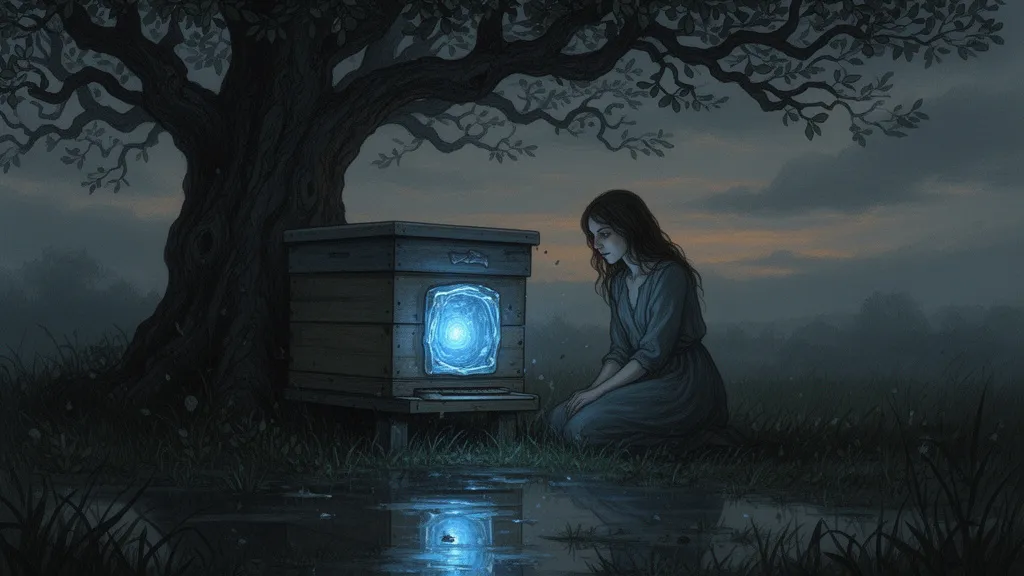
The bees had stopped making noise three hours before dusk, which meant someone had come while Moira was in the back garden turning the compost. She knew the silence before she heard it — that particular quality of absence that suggested intention rather than death. When she returned to the apiary, the largest hive sat perfectly still under the elder tree, its entrance sealed with something that looked like blue glass but moved slightly in the wind, breathing.
The wax was thin enough to see through. The combs inside had been rearranged.
Moira knelt in the grass, which was still damp from the morning's rain, and pressed her palm against the hive's wall. The wood was warm. Inside, the bees hung motionless in patterns she had not taught them — patterns that looked deliberate, architectural, like someone had been arranging furniture in a house they expected to visit again. Each comb bore the same mark stamped into its cap: a sigil she did not recognize, though it made her think of things she had tried not to remember. Circles within circles. A shape that could have been a moon or an eye or a mouth opening underwater.
She was still kneeling there when Constance appeared at the garden gate.
The old apothecary moved slowly these days, which was new. Moira had known her since childhood, when Constance had been the person you visited for medicines that worked and questions you could not ask your mother. Now she leaned heavily on her stick and watched Moira with an expression that suggested she had been expecting this visit, or something like it, for longer than either of them would enjoy discussing.
"You sealed my hive," Moira said.
"I did not." Constance stepped into the garden, careful to avoid the lavender that grew wild along the path. "But I know what did. Or what provided the material, at least."
Moira stood. Her knees protested. She was thirty-seven, which was old enough to feel weather coming and young enough to resent it. "Tell me."
"Someone took a grave candle from the chapel last night. The blue one. It had been burning for six months over Annette Kerrow's stone — you remember her, the woman who drowned fetching water three winters back. They found her caught in the willow roots, still holding the bucket." Constance tapped her stick against the ground twice, which was something she did when a story was turning toward its difficult part. "The wax from that candle would be saturated with whatever she was thinking when the river took her. And if someone knew how to render it, reshape it, press meaning into it while it was still soft—"
"Then they could seal a hive with it," Moira finished. "And the bees would carry the intention."
"The bees are carrying the intention. Look at them. They're holding something. Waiting for you to understand it."
Moira looked. Inside the blue-sealed hive, the swarm had formed itself into a shape that was almost a word, almost a map, almost a memory of something she had tried to forget. She thought of Annette Kerrow, who had been her mother's friend and had taught Moira to read weather in the way willows bent. She thought of the river, which ran black this time of year and smelled of iron and old snow even in summer.
"What happens if I open it?" she asked.
"The swarm leaves. Bees won't stay in a hive that's been violated. They'll sense the broken seal and know the intention was interrupted. You'll lose them." Constance shifted her weight, leaning more heavily on the stick. "But if you carry it to the river before midnight, intact, the wax will dissolve in the water. Whatever message is locked inside will be delivered. And something that's been waiting will understand that you've answered."
"Answered what?"
Constance's expression was the one she wore when dispensing medicines that tasted bitter but worked. "Three people have drowned in that river in five years, Moira. Three, in water that used to be safe enough for children. The river is asking for something. Offering something. The dead leave marks in the world. Sometimes those marks are questions."
Moira pressed her hand against the hive again. The warmth had increased. Inside, the bees shifted slightly, rearranging themselves into a pattern that was almost, almost legible. She thought of Annette, who had been kind and had once told her that bees remembered the faces of people who helped them. She thought of the river, which she had not visited since her brother's funeral four years ago — not drowned, but buried beside it, which felt like the same slow offering.
"And if I don't take it?" she asked. "If I leave it sealed, or open it here?"
Constance was silent for a long moment. When she spoke, her voice was careful, the way it got when she was explaining something the world had taught her but she had not enjoyed learning. "Then the question remains unanswered. And the river will keep asking. It's patient. It has time. You don't."
"That sounds like a threat."
"It's an observation. The world is old and does not care if you understand it. But it does notice when you refuse to listen." Constance turned to leave, then paused. "Midnight, Moira. The wax won't hold past then. After that, it's just dead bees and broken intentions."
She left through the garden gate, moving slowly, her stick tapping a rhythm that sounded like a countdown.
Moira spent the next hour sitting beside the hive, watching the light fail. The sigil on each comb seemed to glow faintly in the dusk, though she knew that was impossible — grave candle wax did not produce its own light. It only held the memory of light, the way certain stones held heat long after the sun had set.
She thought about breaking the seal. It would be easy. A knife, a careful incision, the bees pouring out into the evening air and vanishing into the elder tree. Simple. Final. The message would remain unread, whatever bargain was being offered would lapse, and she could go back to keeping bees the way her grandmother had taught her, with smoke and sugar water and no dead women's intentions pressed into wax.
But the hive was warm. And the bees were still alive, holding their strange formation, waiting.
At a quarter to midnight, Moira lifted the hive. It was heavier than it should have been — not with honey, but with something else, some accumulated weight of intention and old grief and questions the river had been asking since before she was born. She carried it through the garden gate, down the lane, past the chapel where the blue grave candle had burned, toward the sound of water moving over stones.
The river was black and smelled of iron, exactly as she remembered. The willows leaned low, their roots exposed where the bank had eroded. She could see the place where they had found Annette, still holding her bucket, her face peaceful as though she had simply decided to stay.
Moira set the hive at the water's edge and stepped back.
For a moment, nothing happened. Then the blue wax began to dissolve, running like tears down the hive's face, dripping into the river where it spread in thin luminous threads. The bees poured out — not in panic, but in formation, moving as one body, drawing the sigil in the air above the water before dispersing into the willows. She watched them go. They did not return.
The river was silent. Then, slowly, something beneath the surface shifted. Not surfacing, but acknowledging. A presence old enough that it had outlasted many things that had considered themselves permanent. It did not speak. It simply noticed that she had answered.
Moira stood at the water's edge until dawn, waiting for something to happen. Nothing did. But when she returned to the garden, the empty hive sat clean and quiet under the elder tree, and three days later a new swarm arrived, settling in as though the place had always been intended for them.
She never asked what message she had delivered. But the drownings stopped. And on certain evenings, when the light was failing and the river ran swift, she could hear the bees singing in harmonics she had not taught them, holding a frequency that sounded almost like gratitude, almost like remembering, almost like something the river had been trying to say for a very long time.