The River That Kept Returning Upstream
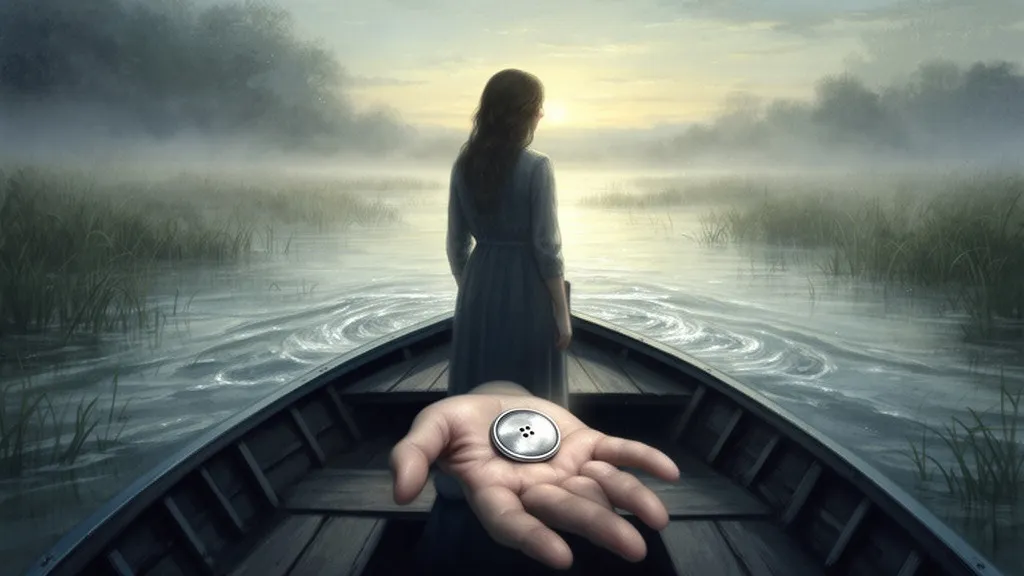
The button arrived first, carried against the current on a morning so still the reeds forgot to whisper.
Maren saw it catch on the ferry's bow rope at dawn—silver, three-holed, stamped with the maker's mark her mother had favoured. She knew it before she touched it. The river mud clinging to its edge smelled of the house that had stood two miles upstream until the winter the levee failed and the water took everything except the people who could swim and the things that floated.
She pulled the button free. It was cold in her palm, which meant the river had been holding it somewhere deep.
The current ran south, as it always had. As it was supposed to.
She dropped the button back into the water and watched it sink.
The shoe came at the next dawn, small and leather and still damp from a child's foot. It wedged itself beneath the ferry platform where the rope wound through the pulley. Maren found it when she came down to begin the day's crossings, and she knew this one too: her sister's, from the year before the house went under, back when Elena had still been young enough to lose shoes in the yard and laugh about it.
The mud on the sole was the same brown-black as the fields behind the house, the fields that were now riverbed.
Maren held the shoe and looked upstream. The water moved south. The sun climbed. Nothing changed except the certainty growing in her chest that the river had decided something and would not be satisfied until she understood what.
She set the shoe on the ferry platform and went to begin the crossings. Three farmers, a merchant's wife, two children who stared at the shoe and asked no questions because river children knew better.
Between crossings, the shoe remained where she had left it.
At midday she threw it into the current. It sank without hesitation, as though the river had been waiting.
The teaspoon arrived on the third dawn, and this time Maren was already awake, sitting on the bank with her feet in the cold water, waiting.
It drifted up against the ferry rope just as the first light touched the reeds. Silver, thin-handled, warm as skin when she lifted it from the water. Her mother's voice came back to her then, not as memory but as presence—the good spoons, Maren, don't let them tarnish—and she felt the weight of the house around her again, the particular creak of the kitchen floorboards, the smell of bread and lamp oil.
The mud on the spoon was still soft.
She looked upstream. The current ran south. The teaspoon had travelled north.
Maren stood and walked into the reeds.
The river narrowed past the bend where the willows leaned. The reeds grew thicker here, tall and pale, and the water moved differently—slower, more deliberate, as though it were thinking about where to go. Maren waded through the shallows, following the memory of the current that should not exist.
The skiff appeared in the half-light like something the river had been holding just beneath the surface and had finally decided to reveal. Cedar, low-sided, empty except for the man sitting in the stern with his hands folded over something small and glass.
He looked at her the way the river looked at things: patient, unhurried, prepared to wait as long as necessary.
"You've been sending them," Maren said.
The man inclined his head. His coat was old wool, river-dark, and when he shifted she heard the faint clink of glass against glass. "The river has been sending them. I've only been the one to carry them this far."
"From where?"
"From the place where your house is still standing."
Maren's breath caught. The reeds bent around them, and the water lapped against the skiff's hull with a sound like something knocking gently, persistently, at a door.
"The house is gone," she said.
"Yes," the man agreed. "And it is still there. The river keeps what it takes. It keeps it the way it was, in the moment of taking. Your house is underwater and whole."
He lifted his hands. The jar beneath his coat came into the light—small, stoppered, filled with something that moved like smoke and water together. Maren stepped closer. Inside the jar, a voice was speaking. Familiar. Constant. Her mother's voice, saying her name the way she had said it every morning when Maren was young, when the house still stood and the world still made the kind of sense that allowed for certainty.
"The river will keep returning what was taken," the man said, "unless you decide what you are willing to lose again."
Maren stared at the jar. "What does that mean?"
"It means the river cannot hold everything forever. It means memory accumulates and becomes weight, and the levee will fail again at noon unless someone makes a choice."
He held out the jar. The voice inside continued, steady and soft and unbearably clear.
"You can open it here, on the bank where everyone will hear," the man said. "Or you can let the river take it back into the reeds. The current will reverse again. The water will rise. The levee will break or hold depending on what you give back."
Maren took the jar. It was cold, and the voice inside did not pause, did not falter. She could hear the exact cadence of her mother's breath between words. She could hear the floorboards creaking in the background.
"What happens if I open it?"
"Everyone hears. The voice becomes air again. The river lets go."
"And if I return it?"
The man's expression did not change, but something in his stillness suggested he had been asked this question before, by other people standing in other rivers with other impossible jars. "The river keeps it. The levee holds. Your house stays where it is, whole and drowned, and you will never see what it sends upstream again."
Maren looked at the jar. The voice inside said her name again, and she remembered the morning the water rose, the way her mother had stood on the porch and refused to leave until the current took the decision from her hands. She remembered swimming, and looking back, and seeing nothing but river where the house had been.
She had not heard her mother's voice since.
The sun climbed. The reeds bent. The water began to move differently, restless now, as though it were preparing to make its own choice if she did not.
Maren carried the jar to the bank where the ferry waited. The rope lay coiled on the platform. The morning crossings had not yet begun. She sat down on the weathered wood and held the jar in her lap and listened.
Inside, her mother's voice continued. It said her name. It said the good spoons. It said don't forget to check the ferry rope before the evening crossing. It said a hundred small, true things that Maren had forgotten she remembered.
She thought about the button, the shoe, the teaspoon. She thought about the house underwater, whole and waiting, holding everything the river had taken.
She thought about the levee, and the people on the other side, and what it would mean if the water rose again.
The sun moved higher. Noon approached.
Maren stood and walked to the edge of the bank. The river moved south, as it was supposed to. The current was steady. The reeds were still.
She held the jar over the water and opened it.
The voice poured out—not smoke, not water, but sound given shape, clear and bright and impossibly present. It filled the air. It travelled across the river. On the far bank, people stopped and turned and listened, and Maren saw the recognition on their faces, the way they all remembered the voice even if they had never heard it, because it sounded like everyone's mother, like every gentle unbearable thing they had lost to the water.
The voice said Maren's name one last time, and then it dissolved into the morning, and the river sighed, and the current flowed south without hesitation.
The man in the cedar skiff was gone. The reeds settled. The jar in Maren's hand was empty and ordinary, just glass and cork and nothing more.
She waited, but no more buttons came upstream, no shoes, no spoons warm as skin.
At noon, the levee held.
Maren returned to the ferry and began the crossings, and the river carried people south the way rivers do, and the house two miles upstream stayed drowned and whole and silent beneath the current, keeping what it had been given until the water forgot what it was supposed to remember.