The Box in My Lap
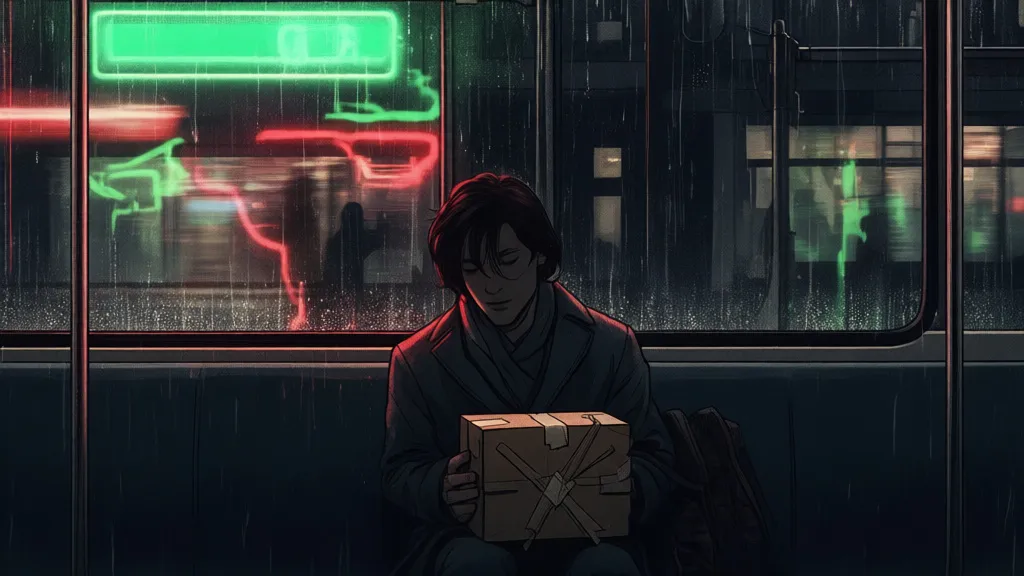
The tram lurches. My shoulder hits the pole. The box in my lap doesn’t move—taped shut, no give. I adjust my grip. The rain on the window blurs the neon Pharmacie sign into a smear of red. Forty minutes to the handoff. Forty minutes to figure out why a dentist’s office smells like wet wool and why the box in my lap is too light to be money.
The waiting room was all white tile and the hum of a drill from somewhere deep. The receptionist didn’t look up when I walked in. Just slid a clipboard across the counter. Sign here. Her pen was chewed at the end. I signed Lucien Moreau—not my name, but the one on the ticket. She took the clipboard back, still not looking at me, and handed over the box. Plain cardboard, no label. Third door on the left, she said. He’s waiting.
The third door was a supply closet. Shelves of cotton swabs, bottles of mouthwash, a single lightbulb swinging from the ceiling. The man inside was short, bald, wearing a lab coat that had seen better days. He didn’t introduce himself. Just took the box from me, opened it, nodded. Good. Then he handed it back. You can go.
I didn’t move. That’s it?
He looked at me like I was slow. Did I stutter?
I left. The box was lighter than it should’ve been. Not money. Not drugs. Something that didn’t rattle, didn’t weigh enough to be anything but paper.
The tram stops. A woman in a yellow raincoat gets on, shaking water from her umbrella. She sits across from me, eyes on the box. I shift it to my other knee. The rain keeps coming down, thick as syrup.
I peel back the tape. Inside: a stack of passport photos. Same man, different crops. In one, his face is full-frame, eyes staring straight ahead. In the next, the top of his head is cut off. Then the chin. Then the left side of his face. Then the right. Like someone was testing how little of him you needed to still recognize him.
I flip through them again. The last photo is the most cropped—just his eyes, the bridge of his nose. The rest of his face is gone.
A text comes in. St-Charles. 20:47. Don’t be late.
I check the time. 20:23. Twenty-four minutes.
The stranger under the station clock is tall, wearing a leather jacket that’s seen better days. His face is bruised—purple around the jaw, yellow under the eyes. He’s smoking, watching the crowd. I slow down as I pass him. He doesn’t look at me, but I know.
I pull out the photos. Compare them to his face. The bruises throw it off, but it’s him. The same sharp nose, the same scar above his eyebrow. The same eyes.
He flicks his cigarette away. It lands in a puddle, hisses.
I keep walking. My phone rings. Unknown number. I answer.
You’re late.
I’m not.
You’re holding up traffic.
What’s in the box?
A pause. Then: Insurance.
Against what?
Against people who ask too many questions.
The line goes dead.
The tram is empty now except for me and the woman in the yellow raincoat. She’s still watching the box. I close it, shove the photos back inside. The tape’s already torn—no sealing it again. The tram lurches. My phone buzzes. Another text. Change of plans. Handoff at the old fish market. 21:00.
I check the time. 20:40. Twenty minutes to get there. The fish market is on the other side of the port. No way I make it in time.
I stand up. The woman in the yellow raincoat stands up too.
You’re not getting off? I ask.
She smiles. I’m going where you’re going.
The rain is heavier now, coming down in sheets. The streets are slick, the neon signs reflecting in the puddles. I walk fast, the box under my arm. The woman in the yellow raincoat keeps pace.
You work for them? I ask.
I work for myself.
What’s in the box?
She laughs. You really don’t know?
Enlighten me.
It’s a puzzle, she says. And you’re the missing piece.
I don’t like the sound of that.
The old fish market is a skeleton of rusted metal and broken glass. The woman in the yellow raincoat leads me inside. The air smells of salt and something older, something rotten. The stranger from the station clock is waiting. He’s not alone. Two others stand behind him, arms crossed.
You’re late, the stranger says.
Traffic.
He nods at the box. Open it.
I do. The photos spill out onto the concrete. The stranger picks one up—the most cropped one, just the eyes. He looks at me. You recognize me?
Should I?
You will.
He hands the photo to one of the men behind him. The man pulls out a lighter, sets the photo on fire. It curls at the edges, blackens, turns to ash.
What the hell is this? I ask.
The stranger smiles. A test.
Of what?
Of how much you don’t know.
The woman in the yellow raincoat steps forward. He passed.
The stranger nods. Good. Then we can get started.
Get started with what?
He doesn’t answer. Just turns to the woman in the yellow raincoat. Take him to the car.
She grabs my arm. I pull away. I’m not going anywhere.
The stranger sighs. You don’t have a choice.
The two men behind him step forward. I back up. The woman in the yellow raincoat blocks my path.
I look at the box. The stranger’s bruised face.
I run.
The rain is cold. My shoes slap against the wet pavement. I don’t look back. I don’t know where I’m going. I just know I need to get away.
My phone rings. Unknown number. I answer.
You can’t run forever, the stranger says.
Watch me.
You don’t even know what you’re running from.
Then tell me.
A pause. Then: You’re the courier. You’re not supposed to know.
The line goes dead.
I duck into an alley. The rain is coming down harder now, drumming against the metal fire escapes. I catch my breath. Check my phone. 20:58. Two minutes to the handoff.
I pull out the box. The photos are gone. In their place: a single key and a note.
You have until dawn.
I look at the key. Then at my reflection in a puddle.
The eyes are the same.