The Locker in the Hold
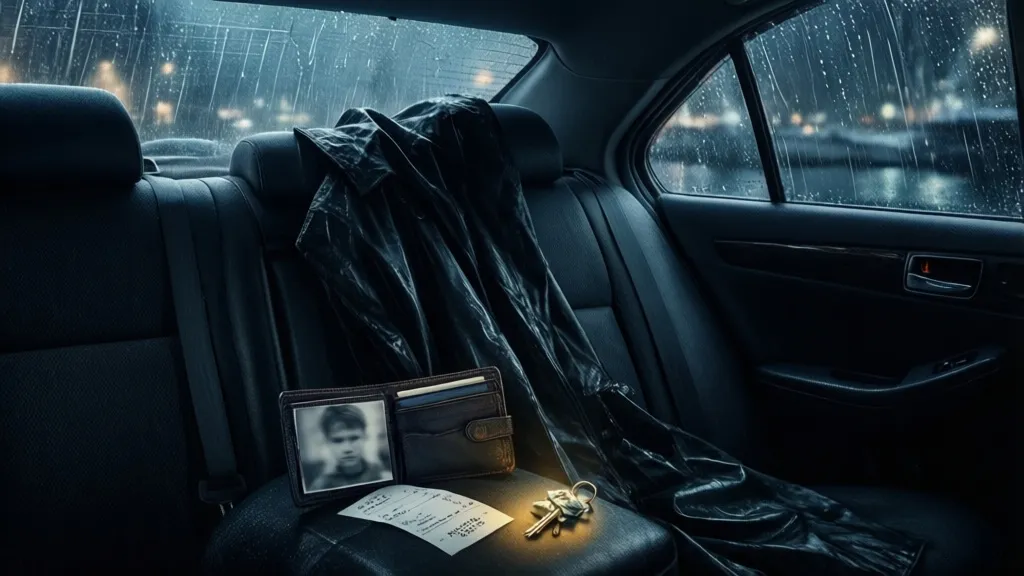
The leather sticks to my fingers. Not glue—heat. Like it’s been sitting on a radiator. Or a lap. I peel the wallet from the raincoat lining, stitches still fresh, thread white against the black fabric. The taxi’s back seat smells of anise and old sweat. The driver’s eyes flick to the rearview, then away. He doesn’t ask. I don’t offer.
The wallet’s thin. No cards. Just:
- A photo: boy, maybe ten, split lip, eyes too wide. Not crying. Worse. Like he’s already decided no one will.
- A marina receipt: Quai des Belges, 03:17, slip 12. Timestamp’s two hours from now.
- A key, wrapped in tissue. The kind that doesn’t fit anything standard. Too small for a door. Too big for a locker.
- A locker ticket: Gare Saint-Charles, Locker 47.
I turn the photo over. Pencil scrawl: Mardi, 23h. Tuesday. That’s tonight. Or yesterday. The hours blur after midnight.
The driver drops me at the Vieux Port. He’s lying about the coat. I know it the way I know when a client’s holding back—the way his hands tighten on the wheel, the way he doesn’t meet my eyes when he says, "Never seen it before." But the coat was warm. And the wallet was warmer.
I walk. The quay’s empty except for a guy in a windbreaker, leaning on a lamppost like he’s waiting for a bus that doesn’t run this late. He’s not. I duck into Le Bar de la Marine, order a pastis, watch the door. Windbreaker follows. Stands outside, pretending to check his phone. The screen’s dark.
The bartender slides me a napkin. "You look like you’ve seen a ghost." I haven’t. Ghosts don’t leave warm wallets. Ghosts don’t hire tails. I sip the pastis. It tastes like licorice and bad decisions.
I pull out the marina receipt. Slip 12. I know the place. Not the fancy yachts—those slips are numbered in gold. Slip 12’s where the working boats dock. Fishing trawlers, smugglers’ skiffs, the kind of boat that doesn’t ask questions if you pay in cash.
Outside, Windbreaker’s still there. I leave through the back, cut through the alley behind Chez Fonfon. The air smells of fried garlic and diesel. My phone buzzes. Unknown number. Text: "You have something that isn’t yours." No shit. I text back: "You want it? Come get it."
The reply’s instant: "Slip 12. One hour."
I walk to the marina. The night’s quiet. Too quiet. No drunks, no fishermen prepping their boats. Just the lap of water against hulls and the hum of the city at my back. Slip 12’s at the far end. A trawler’s tied up there, La Sirène, paint peeling, nets stacked like forgotten spiderwebs. No lights. No movement.
I step onto the deck. The wood creaks. Too loud.
A voice from the cabin: "You’re early."
A man steps out. Mid-fifties, salt-and-pepper stubble, hands rough like he’s spent his life hauling nets. He’s holding a knife. Not a weapon—a filleting knife, the kind you use to gut fish. The blade’s clean. Too clean.
I hold up the wallet. "This yours?"
He doesn’t look at it. "The boy in the photo. That’s my nephew."
"And the key?"
"Insurance." He taps the knife against his thigh. "You’re not the first courier tonight."
I don’t ask what happened to the first one. The way he’s holding that knife tells me enough. "What’s the key for?"
"A locker. Gare Saint-Charles. Number’s on the ticket." He jerks his chin toward the wallet. "They were supposed to pay me for it. Instead, they took the boy."
"Who’s they?"
"Men who don’t like loose ends." He steps closer. The knife glints. "You’re a loose end now."
I move before he does. Not fast—just first. My foot catches a coil of rope. It snaps taut, yanks his legs out from under him. He hits the deck hard. The knife skitters across the wood. I kick it into the water. He groans, rolls onto his side. "You don’t understand—"
"I understand enough." I crouch, pick up the wallet. "You want the key? Go get it yourself."
His eyes flick past me. "Too late."
I turn. Windbreaker’s on the dock, gun in hand. Not a pro—his stance is all wrong, like he’s holding a tool he’s never used. But the gun’s real. And it’s pointed at me.
"Drop the wallet," Windbreaker says. "And the key."
I don’t. "You’re not with them."
"What?"
"The men who took the boy. You’re too sloppy." I nod at his gun. "You’re shaking."
He swallows. "I—I just want the key."
"Why?"
"Because they’ll kill him if I don’t bring it back."
The fisherman laughs. A wet, rattling sound. "You’re the courier? The first courier?" He pushes himself up, wipes blood from his lip. "They sent a kid to do a man’s job."
Windbreaker’s face goes pale. "Shut up."
I toss the wallet onto the dock between us. "Take it. But the key stays with me."
"Why?" Windbreaker’s voice cracks.
"Because I don’t trust either of you." I back toward the cabin. "And because the boy in the photo deserves better than this."
The fisherman lunges. Windbreaker fires. The shot goes wide, splinters the mast. I’m already moving, diving into the cabin. The door’s flimsy. I slam it shut, throw the bolt. Not enough. I grab a rusted harpoon from the wall, jam it through the handle. Outside, shouting. Another shot. The wood splinters.
I find the hatch to the hold. The ladder’s slick with fish guts. I climb down, pull the hatch shut behind me. Dark. Smells like salt and rot. I pull out my phone, turn on the flashlight. Crates. Nets. A stack of oil drums. And in the corner, a locker—Locker 47, bolted to the hull. The fisherman’s insurance. He must’ve moved it here when he realized they were coming for him.
The key fits. The locker’s empty except for a manila envelope. I tear it open. Inside:
- A passport. Lucas Moreau. The boy in the photo.
- A train ticket. Marseille to Barcelona. Departure: 05:42.
- A wad of cash. Euros. Enough to disappear.
And a note, in the same pencil scrawl as the photo:
"They’ll kill him if they find him. But they won’t look for him if they think he’s already dead."
The hold shakes. They’re on the boat. I hear footsteps above, the creak of the cabin door. I stuff the envelope into my jacket, pocket the key. The oil drums are labeled DIESEL. I pry one open. The fumes make my eyes water. I tip it over. Fuel sloshes across the hold, soaks into the crates, the nets. My shoes.
I pull out my lighter. Not a Zippo—one of those cheap plastic ones from a gas station. I flick it. The flame catches. I toss it onto the diesel trail.
The fire spreads fast. Not an inferno—just enough. Smoke fills the hold. I cough, pull my shirt over my mouth, climb the ladder. The hatch is hot. I shove it open. The cabin’s already burning. Windbreaker and the fisherman are gone. Probably jumped when they saw the flames.
I stumble onto the deck. The fire’s climbing the mast. The marina’s waking up—shouts, alarms, the distant wail of sirens. I jump onto the dock, run. The La Sirène groans behind me, then collapses in on itself, a pyre of wood and diesel.
I make it to the station before the first fire truck arrives. My lungs burn. My clothes reek of smoke. I pull out the train ticket. 05:42. I check my watch. 04:17.
I start walking toward the station. The envelope’s heavy in my pocket. The boy’s passport photo smiles up at me. Split lip, eyes too wide. But alive. For now.
The station’s quiet. Too early for commuters, too late for drunks. I buy a coffee from a vending machine. It tastes like battery acid. I sit on a bench, watch the board. Barcelona, voie 5, 05:42. On time.
A woman sits beside me. Mid-thirties, dark hair, a scar above her eyebrow. She’s holding a newspaper. The headline’s about a fire at the marina. "You look like hell," she says.
"I feel worse."
She nods at the envelope. "That for me?"
"Depends. You Lucas’s aunt?"
She doesn’t flinch. "His mother’s sister. You’ve seen the photo."
I pull out the passport, show her the picture. She touches the split lip, just for a second. "They did that to him." Not a question.
"Yeah."
"And the key?"
"Gone. Burned with the boat."
She exhales. "Good." Then she holds out her hand. "I’m Claire."
I hand her the envelope. "Don’t thank me."
"I won’t." She tucks it into her bag. "But I’ll buy you a coffee that doesn’t taste like battery acid."
"Deal."
The train pulls in. She boards without looking back. I watch it leave. The platform’s empty again. My phone buzzes. Unknown number. Text: "You burned the wrong boat."
I delete the message. Walk away.
The city’s waking up. The bakeries are opening. The smell of fresh bread cuts through the smoke in my clothes. I buy a croissant. It’s warm. Too warm.
I eat it anyway."