The Wrong Confession
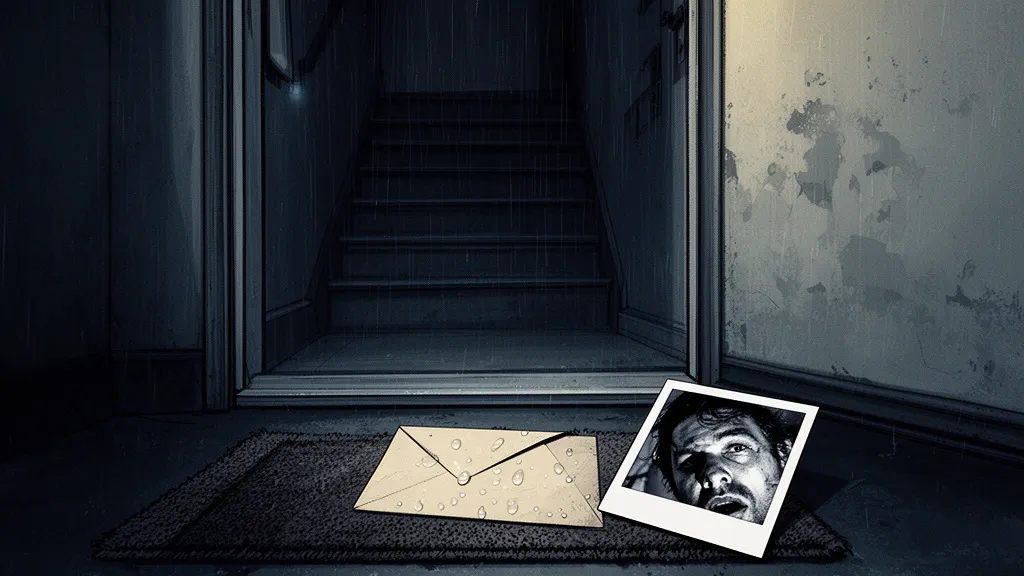
The envelope lands on the doormat with a wet slap. Not sealed. Just tucked, like a tongue in a cheek. Inside, a single Polaroid: a man’s face, eyes half-lidded, mouth slack. The kind of photo you take when someone’s already dead but you want to remember the exact shade of their skin before the fish get to it.
I don’t touch it. Not yet. The stairwell smells like bleach and hot dust, the kind of clean that means someone’s been scrubbing blood off the tiles. My tiles. My building. I know every loose step, every graffiti tag that’s been there since ’08. But I don’t know the man in the photo.
Or I didn’t think I did.
The back of the Polaroid has an address in La Joliette, scrawled in ballpoint. No name. No time. Just the weight of a deadline I didn’t ask for. I check my watch: 9:17 p.m. The harbor’s a twenty-minute walk if I don’t stop for a drink. I stop for a drink.
The café’s called Le Dernier Verre—The Last Glass. Cute. The chairs are up on the tables, legs pointing at the ceiling like drowned men. The woman behind the counter is wiping down the espresso machine with a rag that’s seen better days. She doesn’t look up when the bell above the door jingles.
"We’re closed," she says. Marseille accent, sharp as a box cutter.
"I know." I slide the Polaroid across the counter. The damp edges curl under the fluorescent light. "You recognize him?"
She freezes. Just for a second. Then the rag keeps moving, slow circles on the chrome. "Should I?"
"You tell me." I tap the photo. "He’s supposed to be dead. I’m supposed to be the one who made sure of it."
That gets her attention. Her eyes flick up, dark and quick. She’s younger than I expected. Early thirties, maybe. The kind of face that’s been called handsome more than pretty. A scar runs from her temple to her jawline, pale against her skin. Not recent.
"You’re Devereaux," she says.
I don’t correct her. I don’t have to.
She exhales through her nose, like she’s been holding her breath for years. "You’re late."
"For what?"
"The confession." She tosses the rag into the sink. "Midnight. That’s when they’re coming for the body. If you don’t give them a name by then, they’ll take yours instead."
"Whose body?"
"The wrong one."
The back room smells like anise and old paper. A fan spins lazily in the corner, pushing around the heat. She pours two pastis, no water. The liquid’s cloudy, the color of a bruise.
"His name was Varga," she says. "Miklós Varga. Hungarian. Worked for the Russians until he didn’t."
"And then he worked for me."
"Until you killed him."
I take a sip. The licorice burns. "I didn’t."
"Then who did?"
"That’s what I’m asking you."
She leans back in her chair, crosses her arms. "You think I’m stupid? You show up with a photo of a man you were paid to bury, and now you’re playing detective?"
"I’m not playing."
"No?" She smirks. "Then why’d you take the job if you didn’t do it?"
"Because the client was a priest."
That shuts her up. For a second. Then she laughs, sharp and sudden. "A priest?"
"Father Laurent. St. Victor’s. He had a collection plate full of cash and a story about a man who needed to disappear. Said Varga was a danger to the community."
"And you believed him?"
"I believed the money."
She shakes her head. "You’re a real piece of work, Devereaux."
"I’ve been called worse."
"By me, in about five minutes."
The confession comes in pieces. Like a puzzle someone’s already chewed on.
Varga wasn’t just a courier. He was a ledger. A walking, talking record of every bribe, every backroom deal, every dirty euro that changed hands in Marseille for the last decade. The Russians wanted him dead because he was talking. The French wanted him dead because he knew too much. The Church? The Church just wanted the problem to go away.
"And you?" I ask. "What did you want?"
She doesn’t answer right away. Instead, she pulls a key from her pocket and unlocks a drawer under the counter. Inside, a manila folder, thick with papers. She slides it across the table.
"I wanted the truth," she says. "But the truth’s expensive."
I open the folder. Inside, bank statements, phone records, a photo of Father Laurent shaking hands with a man in a suit who definitely isn’t a priest. The suit’s face is circled in red.
"Who’s this?"
"Commissaire Ravel. Head of the harbor police."
"And the body they’re coming for at midnight?"
"A fisherman. Found him this morning. Throat cut, dumped near the old docks. They’re going to say it’s Varga."
"Why?"
"Because Ravel’s got a promotion riding on this. Clean up the harbor, clean up the city. Varga’s the perfect scapegoat."
I close the folder. "And the real Varga?"
She looks at me. Really looks at me. Like she’s deciding whether I’m worth the trouble. "You really didn’t kill him?"
"No."
"Then he’s still out there."
"Or he’s already in the water."
"Or," she says, "he’s waiting for someone to come clean."
The harbor at 11:30 p.m. is a different animal. The tourists are gone. The bars are empty. The only sound is the water lapping against the docks, the occasional creak of a boat moored too tight. The air smells like salt and diesel.
We’re sitting in her car, a beat-up Peugeot that’s seen better decades. The radio’s on, some late-night talk show about football. She’s got a thermos of coffee, black and bitter. I’ve got the Polaroid, the folder, and a headache.
"You think he’ll show?" I ask.
"He’ll show."
"Why?"
"Because he’s scared."
"Of what?"
"Of being the wrong corpse."
A light flashes on the dock. Not a boat. A car. Headlights cutting through the dark, slow and deliberate. The car stops near the edge of the pier. The engine dies. The door opens.
A man gets out. Tall. Thin. The kind of thin that means he’s been sick or he’s been running. He’s wearing a windbreaker, zipped up to his chin, like he’s trying to disappear into it.
"That him?" I ask.
She squints. "That’s him."
"You sure?"
"Positive."
I open the car door. The night air hits me like a slap. "Stay here."
"Like hell," she says, and gets out after me.
Varga doesn’t run. Doesn’t even flinch when he sees us. Just stands there, hands in his pockets, like he’s been waiting for this moment for a long time.
"You’re late," he says. His voice is rough, like he hasn’t used it in a while.
"Traffic," I say.
He almost smiles. Almost. "You’re not who I expected."
"Who’d you expect?"
"The priest."
"He sent me instead."
Varga looks at the woman. "And you?"
"I work here," she says. "Café down the road. You’ve been in a few times."
"I don’t remember."
"You wouldn’t."
He exhales, long and slow. "I didn’t think they’d send someone like you."
"Someone like me?"
"A man who doesn’t ask questions."
"I ask questions," I say. "I just don’t always like the answers."
Varga nods, like that makes sense. "They told me you were a fixer. That you’d make the problem go away."
"I fix things," I say. "I don’t make people disappear."
"Then you’re not the man for the job."
"No," I say. "I’m not."
He looks at the water. The black, endless water. "What happens now?"
"Now," I say, "you tell me who really wants you dead."
The confession takes ten minutes. Maybe less.
Ravel. The commissaire. The man in the suit. He’s been skimming off the top for years, taking bribes from the Russians, the Albanians, the French. Varga knew. Varga had proof. Varga was going to talk.
"So Ravel hired me," I say. "Through the priest."
"Yes."
"And the priest?"
"A favor. Ravel’s got something on him. Something from a long time ago."
"And the fisherman?"
Varga’s hands tighten into fists. "Wrong place, wrong time. Ravel needed a body. Any body."
"And you?"
"I got away," he says. "Barely."
"Why come back?"
"Because someone has to pay."
The woman steps forward. "And now?"
Varga looks at her. Then at me. "Now you decide."
"Decide what?"
"Who gets to be the corpse."
We leave Varga on the dock. He doesn’t ask where we’re going. Doesn’t ask what happens next. Just stands there, hands in his pockets, watching the water.
The woman drives. I make the call.
"Ravel," I say when he answers. "We need to talk."
The confession happens in a warehouse near the docks. The kind of place that smells like oil and old fish. Ravel’s there, in his suit, looking like a man who’s never gotten his hands dirty. The priest’s there too, sweating through his collar.
"You have the money?" Ravel asks.
"I have the truth," I say. "That’s more expensive."
He laughs. "The truth doesn’t pay the bills, Devereaux."
"No," I say. "But it keeps you out of prison."
I slide the folder across the table. Ravel opens it. His face doesn’t change. Not at first. Then the color drains out of it, slow and steady, like a sink emptying.
"Where’d you get this?"
"Does it matter?"
He looks at the priest. The priest looks at the floor.
"What do you want?" Ravel asks.
"A name," I say. "The man who really killed Varga."
Ravel’s eyes flick to the door. Like he’s expecting someone. "I don’t know what you’re talking about."
"Then you’re not as smart as I thought."
He stands up. The chair scrapes against the concrete. "This is a mistake."
"No," I say. "This is a confession."
The door opens. Varga steps inside, windbreaker zipped to his chin. He’s holding a gun. Not a big one. Just enough.
Ravel’s face goes slack. "You—"
"Me," Varga says. "Surprise."
The priest starts praying. Under his breath. Like it’ll help.
Varga doesn’t shoot. Not yet. Just stands there, letting the moment stretch. Letting Ravel sweat.
"You were supposed to be dead," Ravel says.
"I was," Varga says. "Then I wasn’t."
I don’t move. Don’t speak. This isn’t my confession.
Varga looks at me. "You fixed it."
"Not yet," I say.
He nods. Like that’s answer enough. Then he pulls the trigger.
The body washes up three days later. Not in the harbor. In the Calanques, where the water’s clear and the tourists don’t go. The police find him at dawn. A man in a windbreaker, zipped up to his chin. His pockets are empty. No ID. No wallet. Just a Polaroid in his jacket, faded and damp, of a face that doesn’t match his own.
The official report calls it a suicide. A man with no name, no past, no future. The wrong corpse.
I read about it in the paper. Over coffee. At Le Dernier Verre.
The woman slides into the booth across from me. "You did it," she says.
"I fixed it."
"That’s not the same thing."
"No," I say. "It’s not."
She pours herself a coffee. Black. No sugar. "What happens now?"
I look at the paper. The photo’s grainy, but I recognize the face. The wrong face.
"Now," I say, "we wait for the next envelope."
She almost smiles. Almost.
Outside, the sun’s coming up. Marseille wakes up slow, like a man with a hangover. The harbor glitters. The city breathes.
And somewhere, someone’s already planning the next problem to land on my doormat.